
PAUL ON FOOD
Introduction
It was all very well sorting out a compromise over how Jews and Gentiles could enter the new Jesus community, i.e. through adult baptism, NOT through adult circumcision and baptism. But if you were to have any kind of common life between groups that used different rules about food, how did you cope with that? It was a question that Paul had to use quite a lot of ink on: Romans 14.1 – 15.9; 1 Corinthians 8, 10.14-33, 11.17-34; 2 Corinthians 6.14 – 7.1; Galatians 2.11-21; Colossians 2.16, 21-23; 1 Timothy 4.1-5. 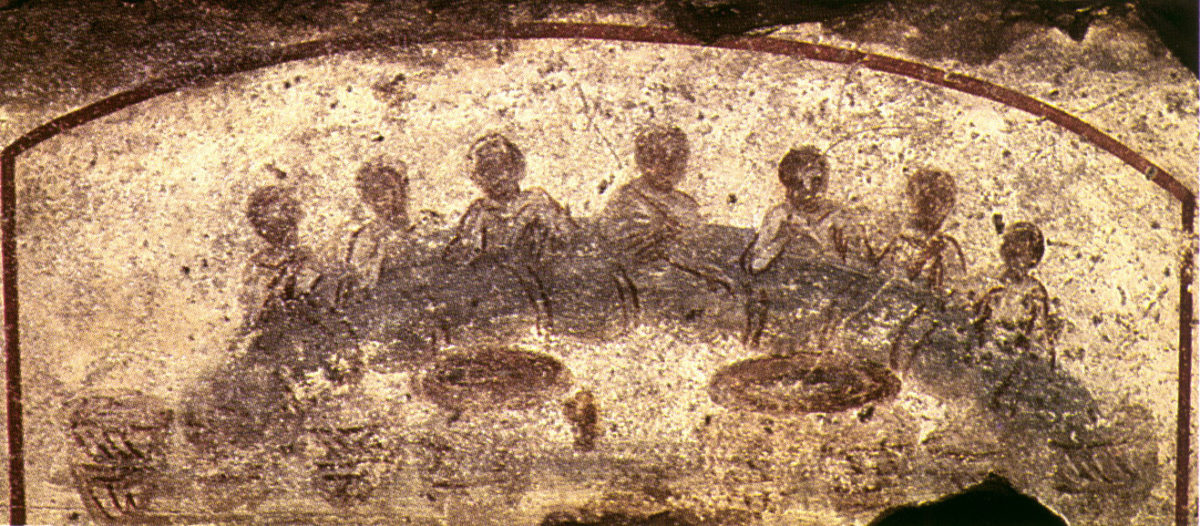
The Guest Problem
Imagine you have invited half a dozen work colleagues to dinner. In deciding on the menu, here are some of the questions you might consider:
Are any Muslim? That means providing halal meat, and certainly no pork
Are any Jewish? That means providing kosher meat, and certainly no pork, or shellfish, but also no cream in sauces, or cheese in the same dish as meat. And possibly buy new saucepans.
Are any Hindu? So no beef.
Are any vegetarians? Eggs, cheese are OK; fish might possibly be OK?.
Are any vegans? So no meat, eggs or cheese.
Are any coeliacs? So no gluten in or even near dishes when preparing them. Use gluten-free flour and g/f bread.
Do any have other allergies? I.e. no peanuts, nuts, sesame seeds, celery, shellfish, pork, milk, soybeans, mustard, lupin (in some oils).
Does anyone have diabetes and should have no sugar or carbohydrates? This means no/little bread, potato, pasta and rice.
Perhaps you have decided on a group expedition to a cinema instead!
The Theology Problem
The food problems which St Paul tackled were not about health, they were all about religion. There were two issues.
1. If Jewish Christians kept the rules on kashrut (kosher food etc.), should Gentile Christians also keep kosher when eating together? Or should Jewish Christians abandon their food rules?
2. Virtually all meat in the ancient world came from temple sacrifices, i.e. the life of the animal was offered to the various gods, Jupiter, Venus, Mars, Athene, etc. Does that mean that all normal meat should not be eaten by Christians?
Kosher or not?
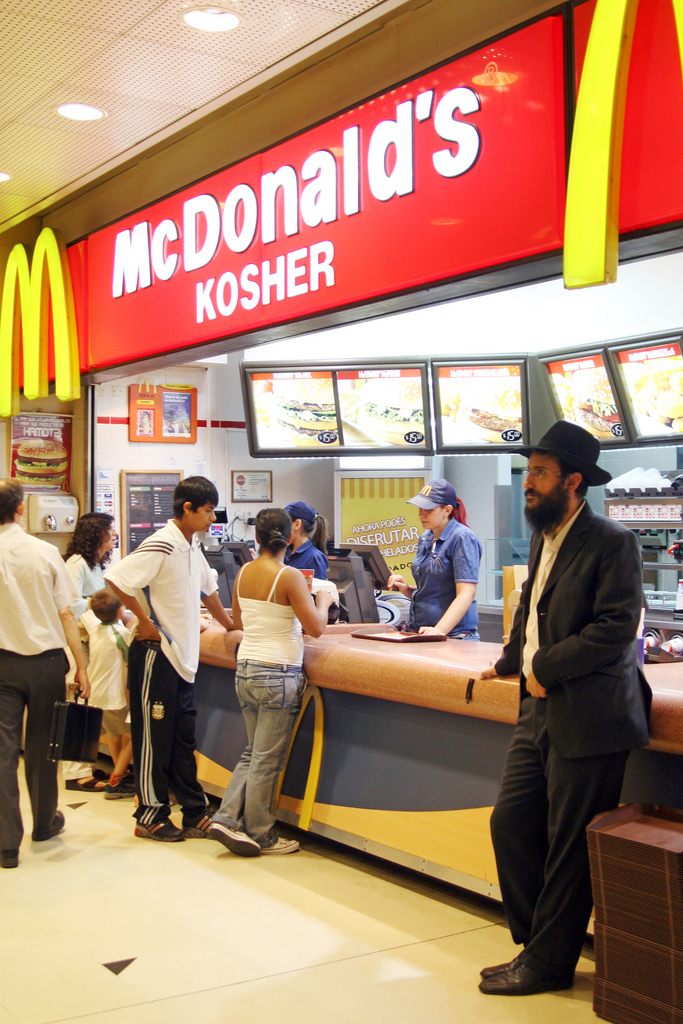 Around 50 AD there was a general meeting in Jerusalem with James, the brother of Jesus as chairman, and Peter, Paul and Barnabas taking part. (See my blog ‘Why we get Paul wrong – Part 2: The Question of Circumcision’) The conclusion was a letter sent to the Christian communities in Antioch, Syria and Cilicia (south-east Turkey) as follows
‘For it has seemed good to the Holy Spirit and to us to impose on you no further burden than these essentials: that you abstain from what has been sacrificed to idols and from blood and from what is strangled and from fornication. If you keep yourselves from these, you will do well. Farewell.’ (Acts 15.20-24)
This meant: 1 No meat bought in public shops or markets to be used; 2 Only kosher meat to be used (i.e. meat with the blood drained out, see Leviticus 17.12: ‘No person among you shall eat blood, nor shall any alien who resides among you eat blood’). 3 No strangled animals, i.e. the same as 2 above. 4 No sex outside marriage, including no marriage between close relatives, and/or after divorce, because of what Jesus said, ‘Whoever divorces his wife and marries another commits adultery against her; and if she divorces her husband and marries another, she commits adultery.’ (Mark 10.11f)
It was in Antioch that matters came to a head:
‘But when Cephas came to Antioch, I opposed him to his face, because he stood self-condemned; for until certain people came from James, he used to eat with the Gentiles. But after they came, he drew back and kept himself separate for fear of the circumcision faction. And the other Jews joined him in this hypocrisy, so that even Barnabas was led astray by their hypocrisy. But when I saw that they were not acting consistently with the truth of the gospel, I said to Cephas before them all, ‘If you, though a Jew, live like a Gentile and not like a Jew, how can you compel the Gentiles to live like Jews?’ (Galatians 2.11-14) (Note: “Cephas” was the Hebrew nickname which Jesus gave to Simon – translates to“Peter” in Greek, or “Rocky” in English).
So here was the situation: Peter, Barnabas and other Jewish Christians in Antioch were happy to blend in with their Gentile compatriots and enjoy a Full English Breakfast or a bacon sandwich. When more observant Jewish Christians came from Jerusalem, they were shocked at the amount of pork (for example) being eaten. Cephas (Peter) and the other  Jewish Christians in Antioch rather shamefacedly went to sit at tables where the kosher rules were kept. They probably felt that it was a small sacrifice to maintain the unity of the Jesus communities in Antioch and Jerusalem.
But Paul would have none of it. He had a stand-up row with Cephas, asserting that Gentiles were not second class Christians. Table fellowship ranked very highly in the ancient world as by itself it created community. Whether or not Jewish and Gentile followers of the Way ate together sent a crucially important message.
Was Paul right? I don’t think the answer is clear. Paul himself implicitly acknowledged this when he wrote Romans 14. See the end of the blog.
Can we eat publicly sold meat?
What are the ethics of food? It is a live issue today. Should we eat only free-range eggs and chicken and pork? Should we give cattle commercial feed which includes chopped up meat products? Should we have a free-trade agreement with the United Sates which has lower standards of animal welfare? So the type of questions which the first generation of Gentile Christians asked should not be strange to us.
The questions arose because all the meat sold in public shops and markets in the Roman world would have come from animals offered in sacrifice to the Roman gods, or as Paul termed them, to demons. There were two responses for serious Christians. One was to become vegetarian. The other was to say that God is greater than all the other spiritual powers at work in the world, so what we eat does not matter. Paul saw both points of view as legitimate.
Some believe in eating anything, while the weak eat only vegetables. (Romans 14.2)
Paul in fact took two contradictory views: 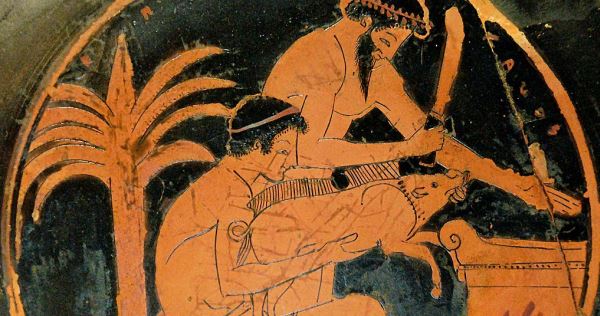
1 “As to the eating of food offered to idols, we know that ‘no idol in the world really exists’, and that ‘there is no God but one.’.. It is not everyone, however, who has this knowledge.” (1 Corinthians 8.4, 7)
2 “What do I imply then? That food sacrificed to idols is anything, or that an idol is anything? No, I imply that what pagans sacrifice, they sacrifice to demons and not to God. I do not want you to be partners with demons.” (1 Corinthians 10.19-21) In the same letter!
Paul’s advice comes in three stages: 1 Work out your own personal position. “Let all be fully convinced in their own minds.” (Romans 14.5) 2 Think about your fellow-believers before your own comfort or convenience. “Everything is indeed clean, but it is wrong for you to make others fall by what you eat; it is good not to eat meat or drink wine or do anything that makes your brother or sister stumble. (Romans 14.20-21) 3 Don’t be judgemental or look down on others (two classic Christian positions!) Why do you pass judgement on your brother or sister? Or you, why do you despise your brother or sister? … Let us no longer pass judgement on one another, but resolve instead never to put a stumbling-block or hindrance in the way of another… If your brother or sister is being injured by what you eat, you are no longer walking in love.
Moral: Love and kindness trump theological consistency!